Published 8 October 2026 · By the VoltPoint Battery Service team
AGM vs EFB vs conventional: which car battery do you need?
The three main battery technologies, what each is built for, and the one rule that matters most when choosing.
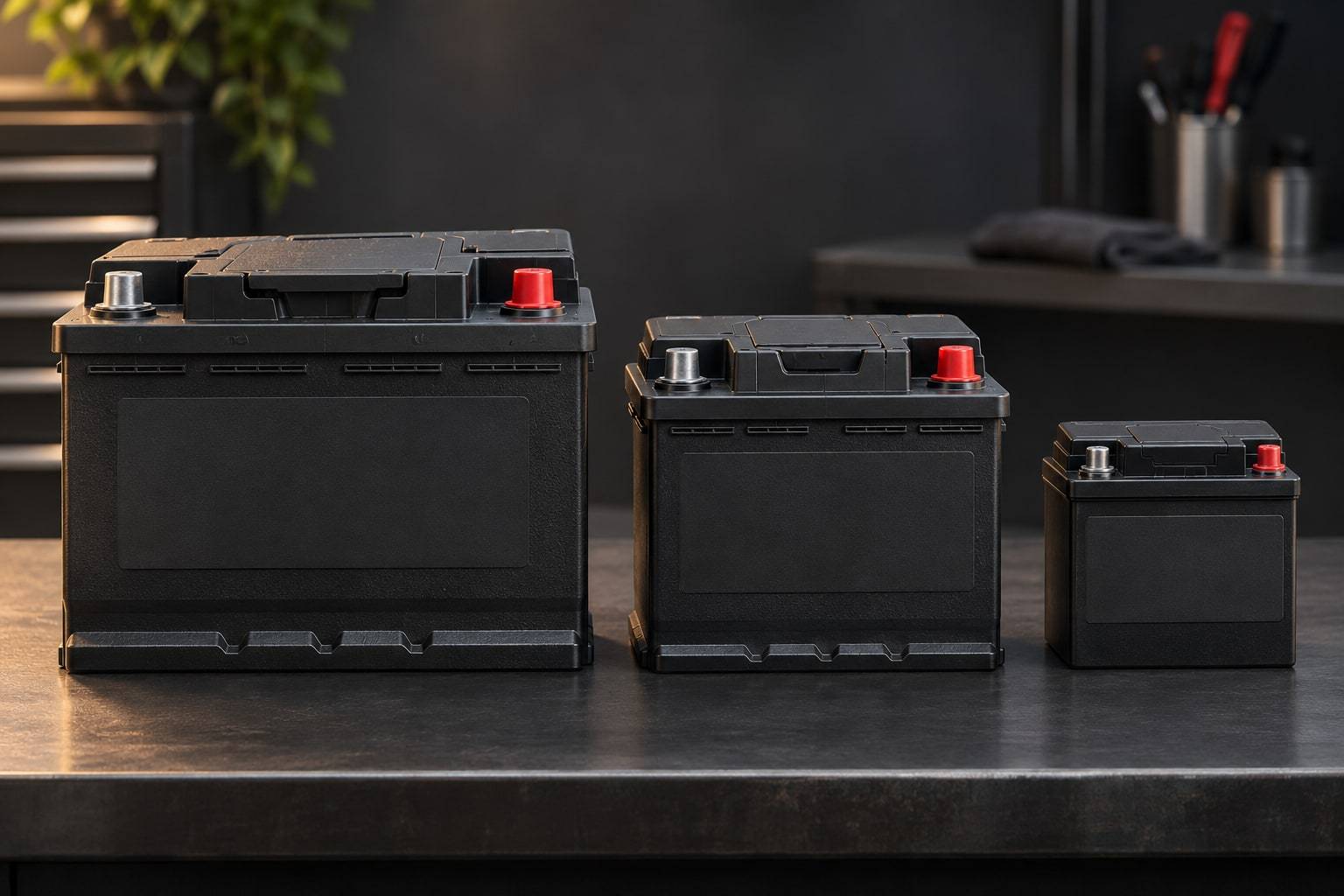
Walk into any battery shop and you will see three main types of car battery: conventional (flooded), EFB and AGM. They can look almost identical from the outside. Inside, they are built for very different jobs.
The short answer
Fit the technology your car was built with, or an upgrade the manufacturer allows. Never fit a lower technology.
- A car that came with AGM should get AGM.
- A car that came with EFB should get EFB or, where permitted, AGM.
- A car that came with a conventional battery can take conventional, or a higher technology if you want more durability.
Conventional (flooded) batteries
The traditional lead-acid battery: lead plates sitting in a liquid electrolyte of sulphuric acid and water.
- Built for: cars without start-stop and with moderate electrical demand.
- Strengths: widely available, affordable, made in every common size.
- Weaknesses: heat speeds up water loss and plate corrosion, and they cope poorly with deep discharges.
Most older Japanese, Korean and American cars, and many current models without start-stop, use conventional batteries.
EFB (Enhanced Flooded Battery)
An improved flooded battery with stronger plates and additives that help it cope with frequent cycling.
- Built for: entry-level start-stop systems and cars with higher electrical demand.
- Strengths: handles repeated engine restarts far better than a conventional battery, at a lower price than AGM.
- Weaknesses: not designed for the deep cycling of advanced start-stop and energy-recovery systems.
AGM (Absorbent Glass Mat)
The electrolyte is held in glass-fibre mats pressed between the plates, so the battery is sealed and spill-proof.
- Built for: advanced start-stop, brake energy recovery and cars with heavy electrical loads. Common in European premium cars.
- Strengths: handles deep cycling and resists vibration. Because it is sealed, it can be mounted in the boot or cabin.
- Weaknesses: costs more, and needs the correct charging profile, which is why the car must know when an AGM battery is fitted.
Comparison
| Conventional | EFB | AGM | |
|---|---|---|---|
| Start-stop | Not suitable | Entry-level systems | Advanced systems |
| Cycling ability | Low | Medium | High |
| Spill-proof | No | No | Yes |
| Typical use | Older and basic cars | Mainstream start-stop | Premium and European cars |
Why the wrong battery fails early
A car with start-stop or energy recovery charges and discharges its battery constantly. Fit a conventional battery and it will wear out quickly, sometimes within months. The car may also disable start-stop because it detects a weak battery.
On cars with battery management, the car also needs to know which technology is fitted. Moving from EFB to AGM, for example, often requires coding the car.
What about the Dubai heat?
Heat shortens the life of every battery type. AGM batteries generally cope with heat and vibration better than flooded batteries, but no battery is immune. What matters most is the right technology, the correct capacity and a healthy charging system.
How we choose
We start with your car: make, model, year, engine, and whether it has start-stop. Then we check the label on the fitted battery, which tells us the technology, capacity and size the car expects. Find your car in our battery guides by brand, or contact us with your vehicle details.
Need help with your battery now?
We come to your car anywhere in our Dubai service area.